
Japan’s sardine catch rises in some regions, but cheap fresh fish may not mean cheaper cans
By Chris Loew • Published: June 17, 2026
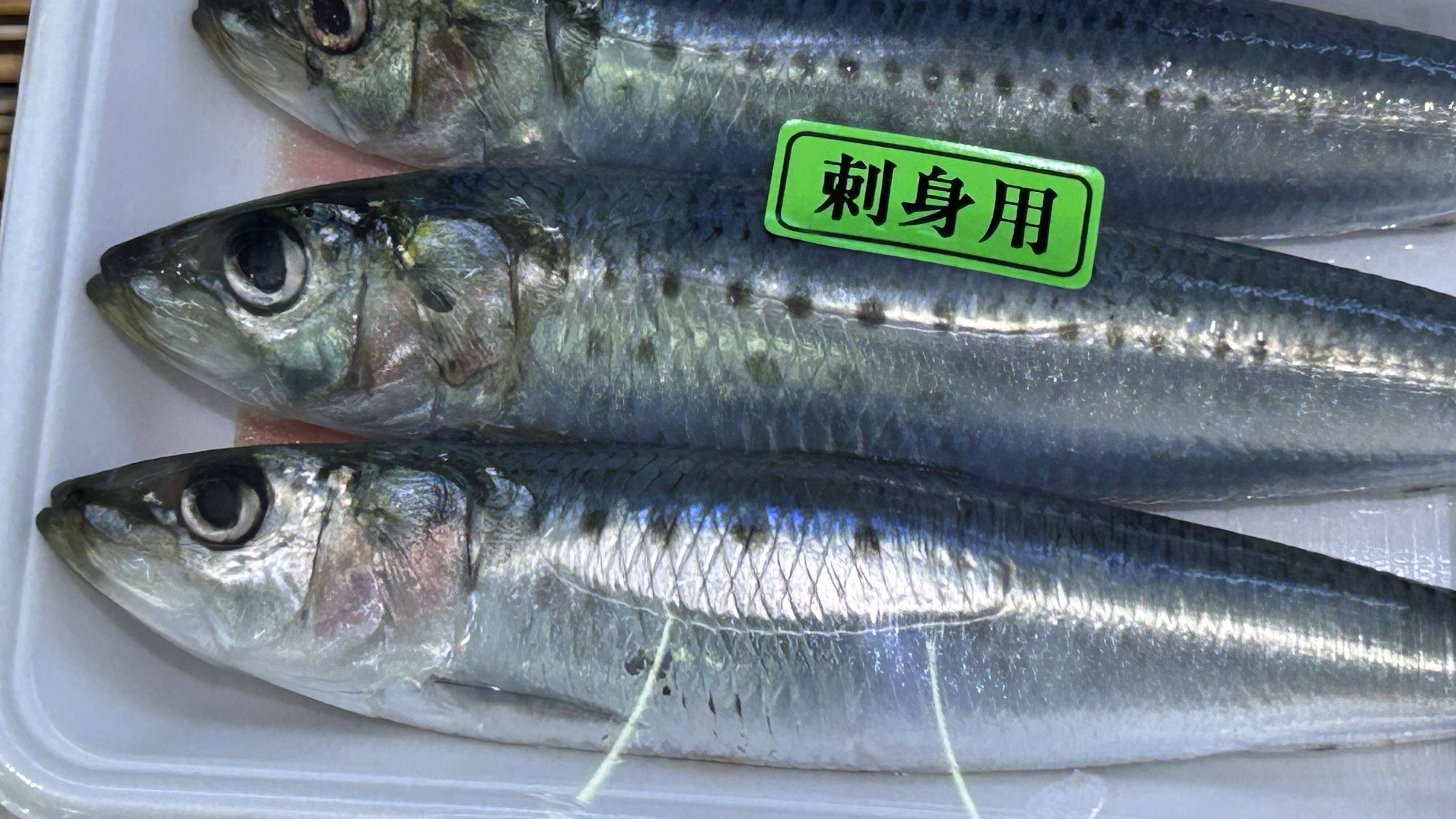
Strong sardine landings in parts of Japan are putting more fresh fish into the market, with Sakaiminato, Tottori Prefecture, reporting a sharp increase early in 2026.
FNN Prime Online reported that Sakaiminato landed 30,940 metric tons (MT) of sardines from January to March 2026, about 20 percent more than in the same period of 2025 and about 1.8 times the normal level. The report described 2026 as an atari-doshi, or good year, for sardines.
The same report cited the Tottori Fisheries Experiment Station as saying one possible reason was that sardine schools arrived near the fishing grounds earlier than usual, beginning around early February. That allowed landings to accumulate during the first quarter.
The retail impact was visible in at least some Tokyo shops. FNN reported a Tokyo example of Tottori sardines selling for JPY 108 each (USD 0.67, EUR 0.58), or five for JPY 432 (USD 2.69, EUR 2.31), equal to about JPY 86 per fish. The report also said the sardines were larger than usual. That kind of pricing gives sardines renewed appeal at a time when many seafood products remain expensive. Sardines are familiar to Japanese consumers, can be grilled or prepared simply, and can be promoted as a lower-cost domestic fish.
The wider picture, however, is uneven. The Minato Shimbun reported, citing the Japan Fisheries Information Service Center (JAFIC), that fresh Japanese sardine landings at major national ports in March 2026 were 26,412 MT, down 58 percent year on year. The same report said Choshi, Chiba Prefecture, landed 560 MT of fresh Japanese sardines in March, down 78 percent from a year earlier.
Choshi is one of Japan’s major sardine landing ports, so weakness there complicates the narrative of a simple nationwide surge. The available information instead points to a regional and seasonal split. Sakaiminato, on the Sea of Japan side of Honshu Island, had strong early-year landings, while Pacific-side conditions were weaker.
Sardines are one of Japan’s high-volume fish. They are used in fresh markets, prepared foods, canned products, fishmeal and feed ingredients. A strong catch can affect fresh retail prices, processor procurement and substitution demand for other small pelagic fish.
Japanese sardines, or maiwashi, are only one part of the broader Japanese iwashi category. Other species include urume iwashi, or round herring, and katakuchi iwashi, or Japanese anchovy.
Japanese sardines are known for large resource cycles, and Japan manages the species by regional stocks. The Pacific stock is fished from Choshi and other Pacific-side ports, while the Tsushima Current stock refers to fisheries from the East China Sea through the Sea of Japan, including Sakaiminato.
Japan’s Ministry of Agriculture, Forestry and Fisheries (MAFF) preliminary 2025 marine fisheries statistics show that Japan’s last year's catch of maiwashi totaled 707,600 MT in 2025, up 41,200 MT, or 6.2 percent, from 2024. That made sardines one of the few major marine species to increase in a year when Japan’s overall marine fisheries catch fell 3.1 percent to 2.7005 million MT.
Those landings are far below the levels reached during Japan’s historical sardine peaks, but the stock has recovered substantially from the lows of the 2000s. The Fisheries Research and Education Agency’s (FRA) 2025 assessment of the Tsushima Current stock says that stock reached about 10.2 million MT in 1988, fell below 1 million MT in 1995, dropped below 10,000 MT in 2001, and recovered to 1.751 million MT in 2024.
The Pacific stock has also retreated from its recent high but remains much larger than during the low-stock years. JAFIC’s Technical Review, citing FRA resource assessment material, said the Pacific stock peaked at 5.90 million MT in 2022 and was estimated at about 4.00 million MT in 2024.
The two figures are separate stock assessments, not a single official nationwide stock estimate. Together, the 2024 Pacific and Tsushima Current stock estimates would total about 5.75 million MT.
For the Tsushima Current stock, FRA projected a 2026 average catch of 453,000 MT. For the Pacific stock, the Japan Fisheries Agency (JFA) and FRA materials give a 2026 average catch projection of 603,000 MT under a scenario assuming continued good recruitment.
Recent ocean conditions help explain why landings at different ports can vary widely. The March 2026 JAFIC Technical Review reported that the Kuroshio large meander, which began in August 2017, ended in April 2025, and that the Kuroshio Extension’s northward shift in 2023–2024 raised Sanriku/Joban surface temperatures and advanced the northward migration timing of sardines. The same report said the northward shift was resolved in 2025 and sardine northward migration became later than in 2023–2024.
The Kuroshio is a strong warm current that runs northward along the Pacific side of Japan. In some years it diverts far offshore in what is called a large meander, affecting ocean temperatures and fish migration patterns.
A strong landing season can make fresh sardines cheaper, especially when retailers are able to promote local or seasonal supply. But canned seafood prices reflect a broader cost structure, including many non-fish costs. So canned sardines can rise in price even in a year with good fresh landings.
Kyokuyo Co., Ltd., based in Tokyo, has announced 2026 canned-product price revisions, citing higher raw material, labor and manufacturing costs. Ito Foods Co., Ltd., based in Shizuoka, Shizuoka Prefecture, also announced April 2026 price revisions, citing raw material prices, packaging-material costs and logistics costs. Tominaga Boeki Kaisha, Ltd., based in Kobe, Hyogo Prefecture, announced a July 2026 canned seafood price revision, citing high raw-material prices for mackerel as well as packaging, energy, labor and logistics costs.
Those announcements show that shelf-stable seafood prices are driven by more than fish supply alone. Metal cans, labels, labor, energy, logistics, storage and inventory costs can keep pressure on processors even when one raw material becomes more available.