
Norwegian herring imports surge as Japan seeks lower-cost fish options
By Chris Loew • Published: June 8, 2026
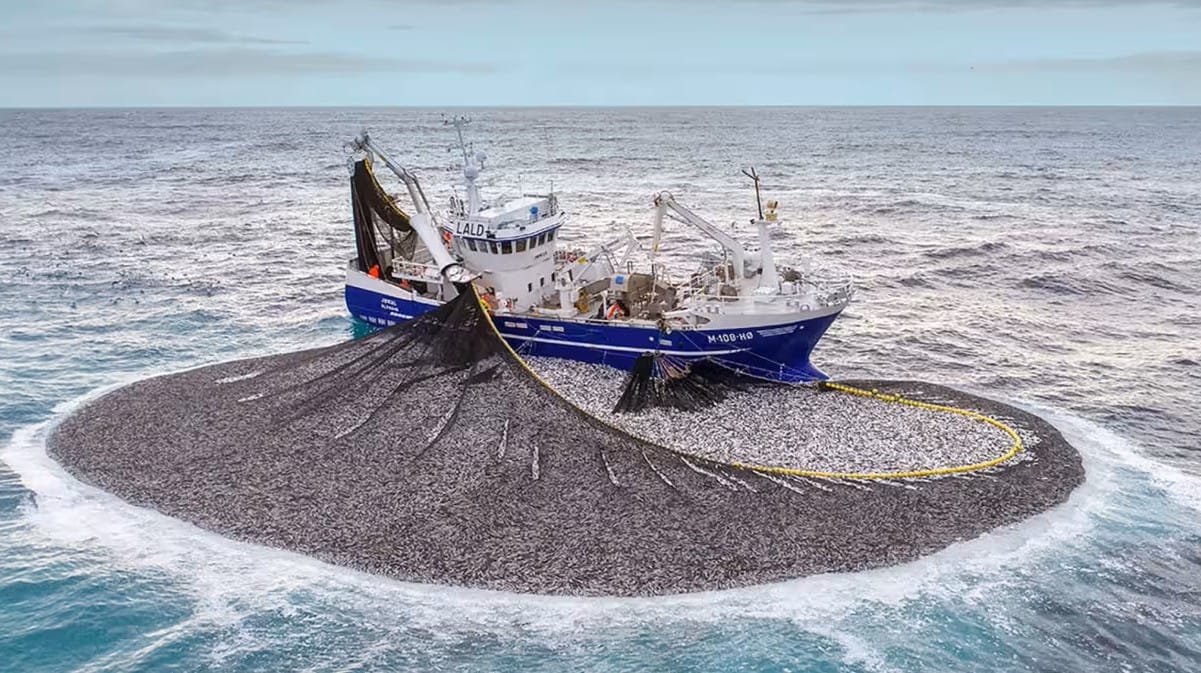
Norwegian herring imports to Japan are rising sharply as higher mackerel prices push Japanese seafood retailers to test lower-cost alternatives.
The Nikkei reported on 5 June that Norway exported more than 3,200 metric tons (MT) of herring to Japan from January to May 2026, already exceeding the full-year total for 2025, citing the Norwegian Seafood Council (NSC).
Norway's main seafood exports to Japan are Atlantic salmon--generally flown fresh to Japan for sushi and sashimi--and mackerel, which is shipped frozen by sea and used for grilling. Herring in Japan is mainly served as a grilled fish like mackerel.
The Nikkei article cites trade statistics showing that the January-April 2026 import price for Norwegian mackerel was JPY 763 per kilogram (USD 4.76, EUR 4.10), up 70 percent year on year, while that for Norwegian herring was JPY 288 per kilogram (USD 1.80, EUR 1.55).
In its March 2026 seafood export update, the Norwegian Seafood Council quoted Johan Kvalheim, NSC director for Japan and South Korea, as saying, “There is growing interest in Norwegian herring in Japan. Due to the limited availability of mackerel and high prices, many players are looking for an affordable and good alternative...”
The product is already appearing in retail and prepared-food channels. Nichimo Co., Ltd., based in Tokyo, began selling herring fillets to supermarkets and fresh fish retailers in April and plans annual sales of 500 MT, according to the Nikkei. The company’s approach highlights one of the main product-development issues for herring in Japan: bones.
Herring has many small bones. The Nikkei reported that Nichimo cuts the bones at intervals of 3 to 5 millimeters at processing plants, making them less noticeable when the fish is grilled with salt. The technique is similar to that used in Japan for hamo (pike conger).
That processing step may be important for consumer acceptance. Herring, or nishin in Japanese, is not unknown in Japan. Herring roe, called kazunoko, is a familiar New Year food (mainly imported from Alaska), and preserved herring (dried and simmered in soy sauce) appears in traditional dishes such as nishin soba (herring with buckwheat noodles), popular in Kyoto. However, imported herring fillets sold for use as grilled fish are a different retail proposition.
The convenience store chain 7-Eleven Japan, based in Tokyo, is also testing that prepared-food format. The Nikkei reported that 7-Eleven stores nationwide began selling Seven Premium (house brand) grilled salted herring from late May, priced at JPY 298 before tax (USD 1.86, EUR 1.60). The Nikkei quoted Yuto Mabuchi, a merchandiser in Seven & i Holdings’ Seven Premium Development Strategy & Planning Department, as saying the product was added to increase the range of fish side dishes.
For retailers, preparation may make the difference for buyer acceptance. A whole or minimally processed herring requires shoppers to handle the bone issue themselves. A bone-cut fillet or ready-to-eat grilled product reduces the preparation burden and makes the fish easier to place beside familiar grilled items such as mackerel.
Japan's own herring stocks are also recovering after years of tiny harvests, creating a need to rebuild demand for the fish. In a 2024 SeafoodSource article on a collaboration between Tokyo-based Maruha Nichiro and Osaka Shoin Women’s College in Higashiosaka, Shin-ichi Fukumaru, a sales development manager at Maruha Nichiro, said Japanese herring landings had exceeded 5,000 MT in both 2022 and 2023 after falling to as low as 200 to 300 MT per year in the early 2000s. Professor Shingo Hamada of Osaka Shoin said many consumers no longer have a clear idea of how to use herring in dishes, making canned products and recipes a lower-barrier way to reintroduce the fish.