
Processing automation and freezing tech gain traction amid Japan seafood labor shortages
By Chris Loew • Published: March 21, 2026
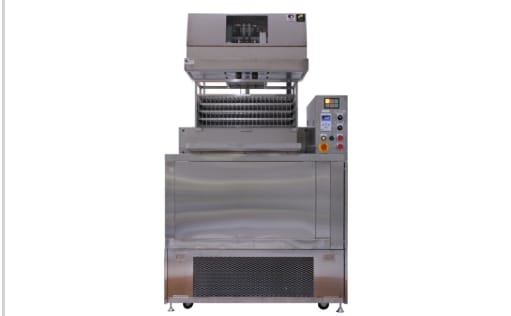
Exhibitors at Seafood Show Osaka 2026 highlighted a growing shift toward automation, rapid freezing, and labor-saving processing technologies, as Japan’s seafood sector responds to tightening workforce constraints and rising export requirements.
The event, organized by the Japan Fisheries Association, was held at ATC Hall in Osaka on February 25–26, bringing together equipment manufacturers, processors, and exporters across specialized zones including processing, cold-chain logistics, and aquaculture. Several exhibitors focused on machinery designed to reduce labor input while maintaining throughput and product consistency.
This focus reflects structural challenges identified in government materials.
The Ministry of Agriculture, Forestry and Fisheries (MAFF) says labor shortages and staffing constraints remain a challenge in food manufacturing, while the Fisheries White Paper summary notes that fishery processors face challenges including shortages of employees. The Fisheries Agency has also said in a 2026 support notice that labor shortages in seafood processing are becoming more severe, particularly in regional areas where many processors are small and medium-sized operators near landing ports.
At the same time, policy direction is placing greater emphasis on value-added production and export readiness.
MAFF’s export policy materials emphasize the need to supply overseas markets on required specifications for volume, price, quality, and standards. The Fisheries White Paper summary also notes that fishery processing facilities exporting to markets such as the EU and United States must comply with HACCP and related facility standards. Meanwhile, a JETRO report on Japanese scallop promotion in the US market discusses the growing importance of traceability and quality assurance in export positioning.
Against this backdrop, equipment manufacturers at the Osaka show presented systems aimed at automating key processing steps.
Dhowa Technos exhibited processing line components designed to integrate sorting, cutting, and packaging into semi-automated workflows, with an emphasis on reducing manual handling and improving yield consistency.
Riko Engineering focused on freezing and cold-chain systems, including rapid and ultra-low-temperature technologies intended to preserve product quality during storage and transport. These systems are particularly relevant for export-oriented processors handling species such as scallops, tuna, and yellowtail, where texture and color retention are critical.
TATS Corp. presented compact processing units targeting smaller-scale operators, designed to reduce dependence on skilled labor while maintaining production volumes.
The concentration of such technologies across exhibitor categories—including processing machinery, sanitation systems, and logistics—suggests growing demand for integrated solutions combining automation with cold-chain control.
Freezing technology in focus
Rapid freezing allows processors to stabilize supply and manage variability in landings, while ultra-low-temperature systems enable longer storage without significant quality loss. These capabilities are increasingly important for exporters shipping to distant markets, where maintaining product quality requires strict temperature control throughout the supply chain.
Operational and export pressures
For processors, the shift toward automation reflects both operational and commercial pressures.
Labor shortages make it increasingly difficult to sustain production using manual processes. At the same time, export markets require consistent specifications, hygiene standards, and traceability. Automated systems can help reduce variability and support compliance, although adoption levels vary depending on company size and access to capital.
Larger processors and vertically integrated aquaculture companies are generally better positioned to invest in such equipment. Smaller regional operators may face cost and scale constraints, an issue that aligns with Fisheries Agency discussion of seafood processing structure, labor constraints, and resilience challenges.
Public data on automation adoption specific to seafood processing remain limited. However, the prominence of processing and freezing technologies at Seafood Show Osaka suggests that investment in labor-saving systems is becoming a central focus for at least part of the industry.
The technologies presented at the exhibition indicate a gradual shift toward more automated and capital-intensive operations. While adoption remains uneven, the concentration of equipment on display reflects broader movement toward systems designed to maintain output, improve consistency, and support export-oriented supply chains.