
High Seas Treaty enters into force
By Chris Loew • Published: January 19, 2026
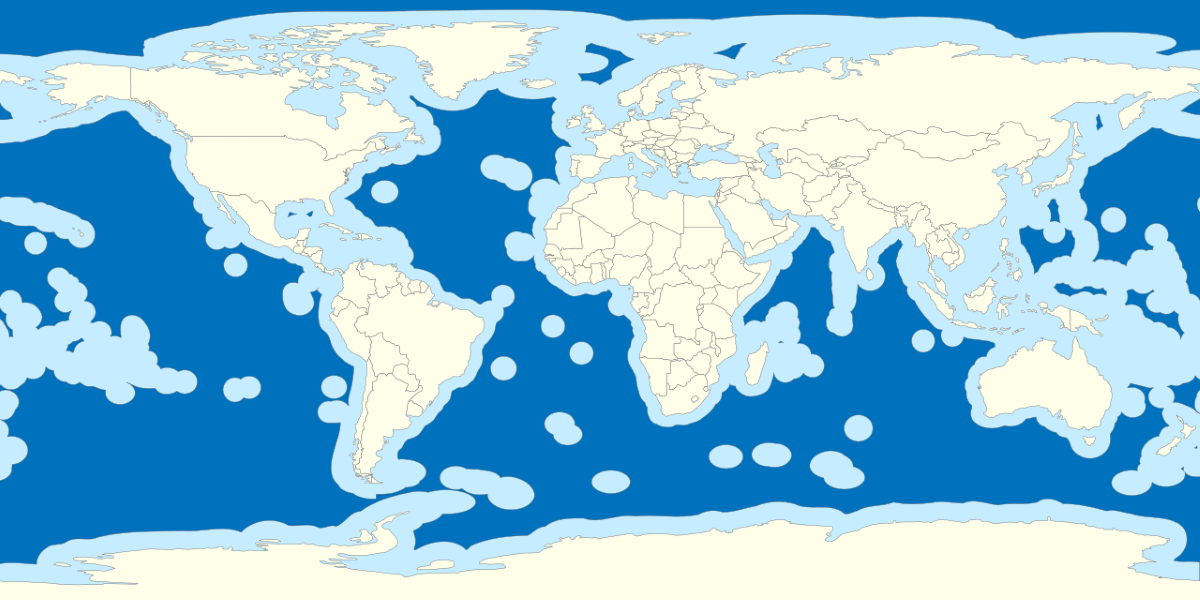
The Biodiversity Beyond National Jurisdiction (BBNJ) Agreement—informally known as the High Seas Treaty—entered into force on 17 January 2026, after clearing the minimum necessary 60 ratifications in September 2025. The treaty creates binding rules for protecting biodiversity in international waters, but only applies to countries that have ratified it.
Areas beyond national jurisdiction—outside the exclusive economic areas (EEZ) of any country and commonly referred to as the “high seas”—cover nearly half of the planet. As of late 2025, around 75–80 states had ratified or acceded to the treaty, including Japan and many Caribbean, African, European, and Pacific Island nations, according to the High Seas Alliance, an international coalition of NGOs working on high-seas ocean conservation and legally registered as a nonprofit in the Netherlands.
While the start date signals a transition from negotiation to implementation, the basic structures for implementing the treaty are still under development. The Preparatory Commission continues to lay the foundation for the Treaty’s institutions, including the Secretariat, the Scientific and Technical Body, and the Access and Benefit-Sharing Committee.
Still, entry into force means that countries that have ratified the Treaty are obliged to begin implementing a range of obligations immediately, including promoting conservation objectives across international forums, cooperating on marine scientific research and technology transfer, and ensuring that environmental impact assessments for planned activities in the high seas meet the Treaty’s standards.
Attention now turns to the work of the BBNJ Preparatory Commission, which is tasked with laying the institutional groundwork ahead of the first Conference of the Parties (CoP1), expected before January 2027. CoP1 is expected to play a decisive role in shaping how the Treaty functions in practice, including the adoption of rules of procedure, financial arrangements, and the final structure of subsidiary bodies. Decisions taken at CoP1 will determine how quickly measures such as marine protected areas (MPAs), scientific cooperation frameworks, and marine genetic resource reporting systems can be put in place.
One of the most closely watched outcomes of the Treaty is the potential creation of a global network of high seas MPAs. Although formal approval processes are still being designed, countries can already begin preparing proposals based on scientific evidence and consultations. Issues such as financing, monitoring and enforcement, and the integration of Indigenous and traditional knowledge are expected to be central to these discussions.
The High Seas Alliance has identified several areas that could form part of an initial wave of high seas MPAs, including the Emperor Seamounts, the Sargasso Sea, and the Salas y Gómez and Nazca Ridges. Supporters argue that early action in these regions could deliver meaningful biodiversity and climate resilience benefits while setting precedents for how the Treaty is implemented globally.
While the treaty now enters into force because it reached the required 60 ratifications, several major world powers have signed but have not completed ratification, including the United States, China, the United Kingdom, India, Russia, Brazil, and much of the rest of the G20.
The official status of signatures and ratifications can be found on the UN website and the High Seas Alliance’s ratification tracker. The number shown on the High Seas Alliance tracker reflects only the ratifications that count toward entry into force and does not include the EU’s ratification, and therefore differs from the UN’s total count.
The treaty becomes international law only for Parties (countries that have ratified). States that haven’t ratified are not obligated to implement MPAs or other treaty measures. However, in practice, the treaty sets global norms: even non-parties may face diplomatic, economic, or reputational pressure if they ignore emerging high seas protections. In some cases, regional fisheries management organizations or other binding agreements might intersect with high seas protections and affect how non-parties operate functionally in those areas—but this is not a direct legal obligation under BBNJ.
In short, major maritime powers that have not ratified aren’t yet legally bound to implement High Seas MPAs under the treaty, though diplomatic and market pressures may still influence their behavior.